






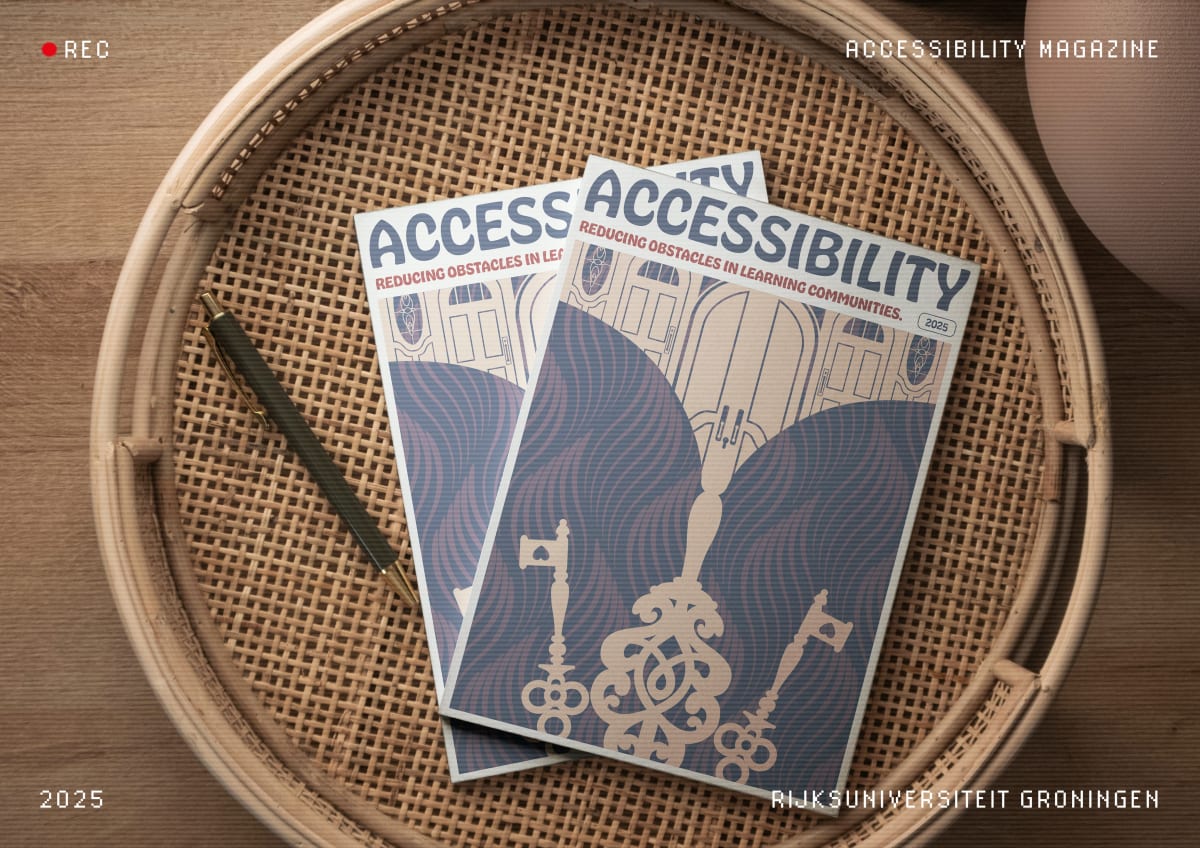


This magazine design was created for Līga Kļaviņa, Department of Psychology, Faculty of Behavioural and Social Sciences at the University of Groningen.
The goal of this magazine is to inform and raise awareness among students and lecturers that not all students learn in the same way. Some students may occasionally require extra support during their studies or need specific adjustments to the learning materials in order to better read, see, or understand them. This magazine provides information, tips, useful resources, and quotes based on past experiences that can help others access the same material in ways that suit their individual needs.
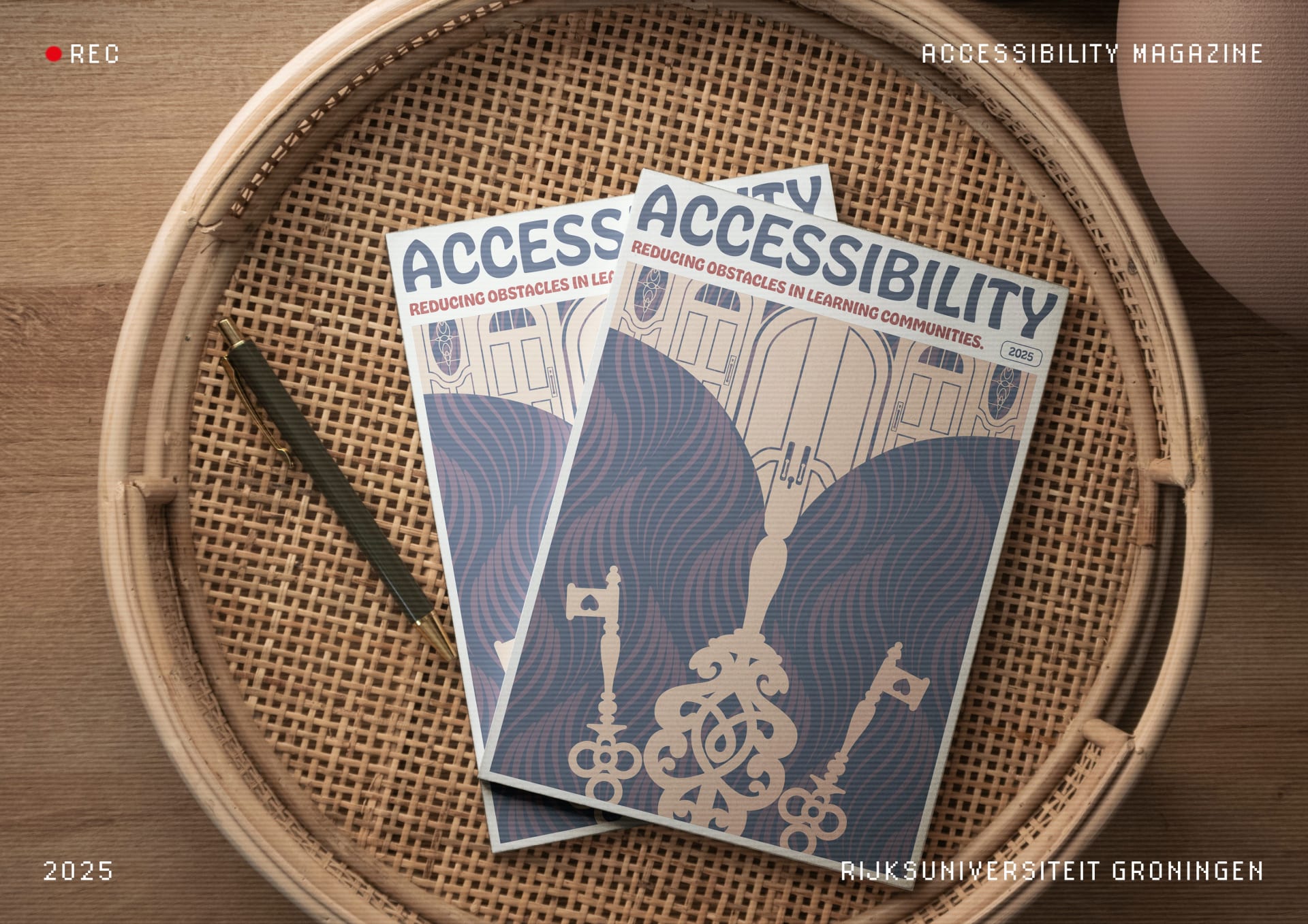
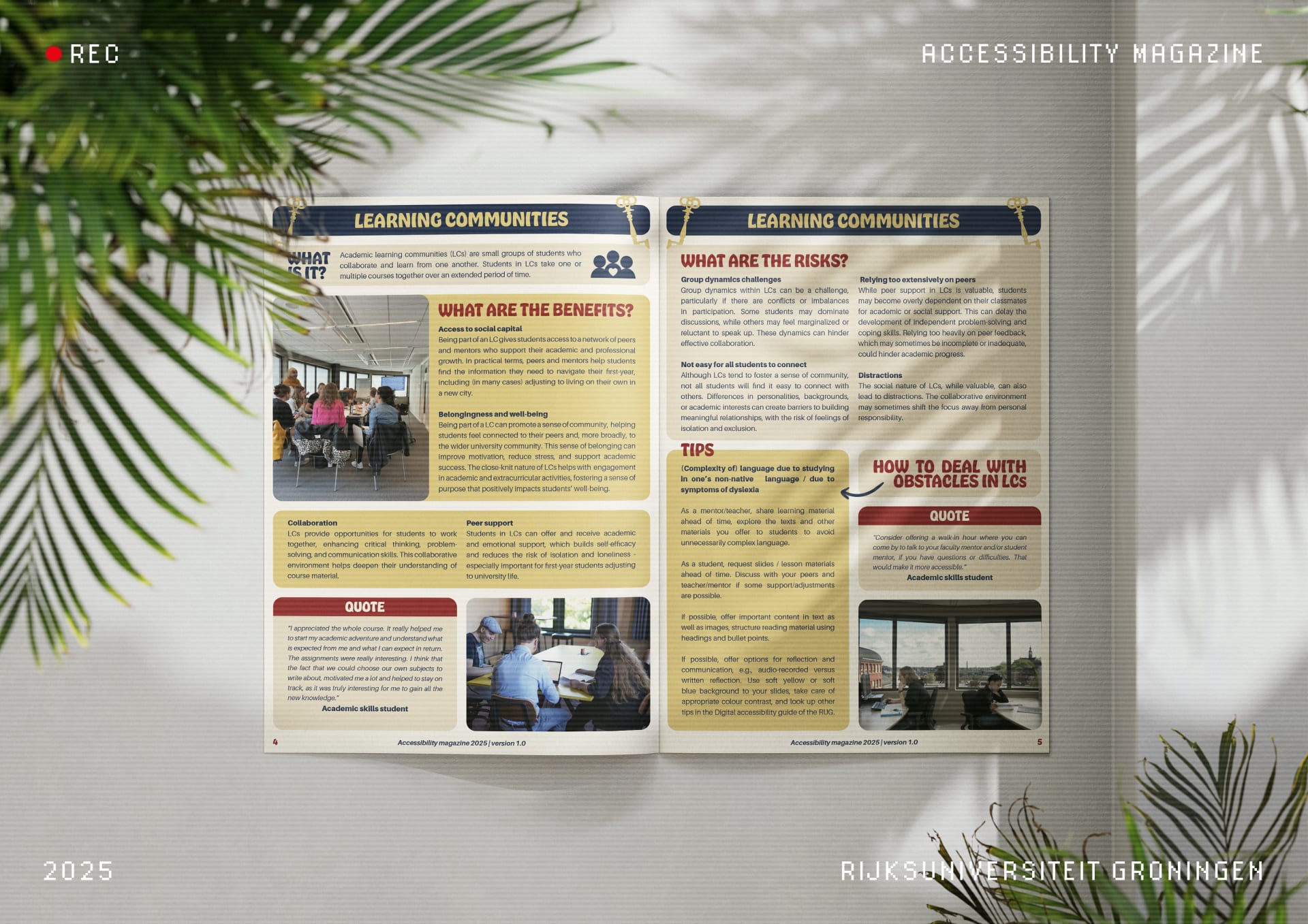
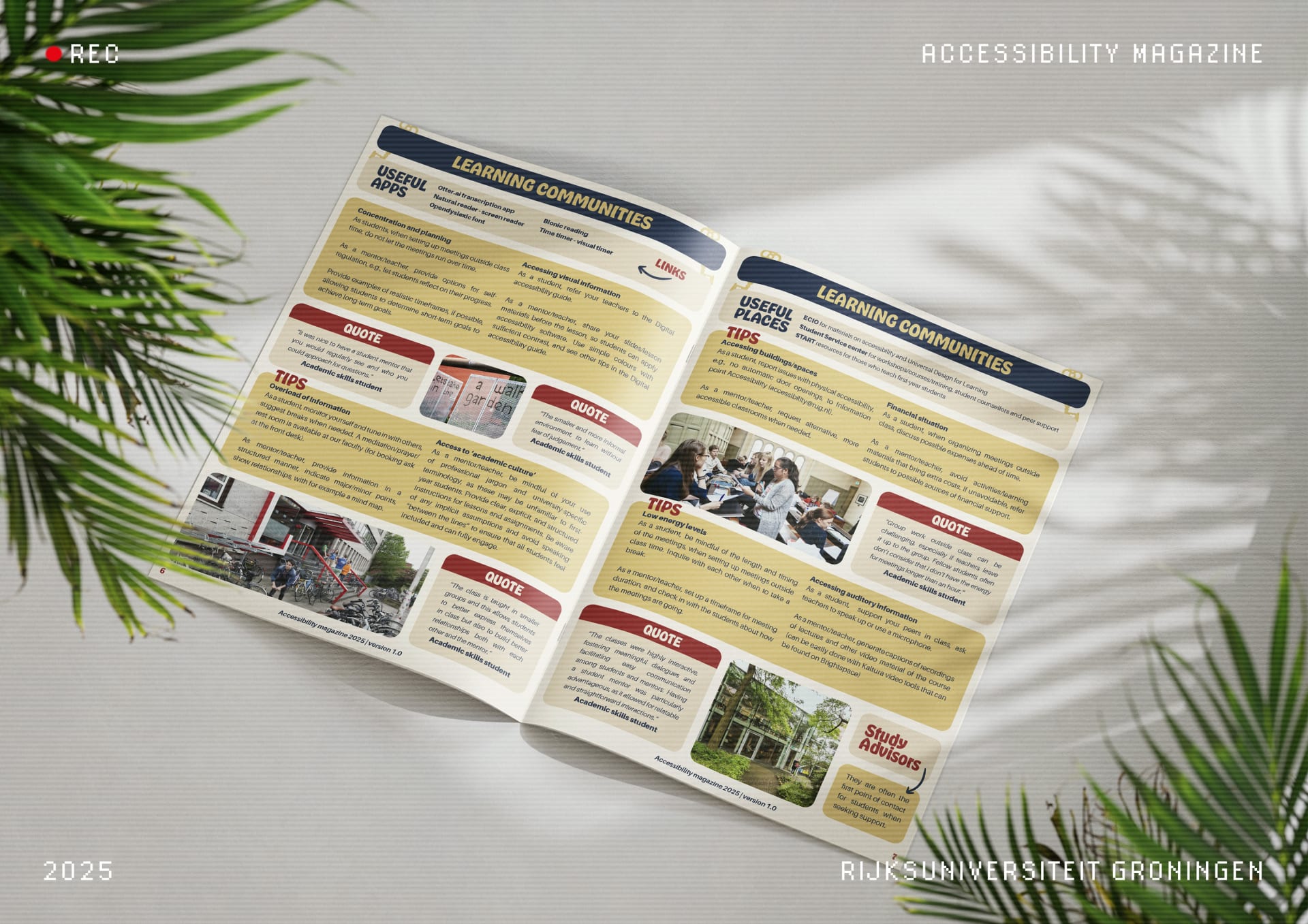
The design combines modern layout elements with retro colours and design features (such as the cover design and decorative borders) to create a visual style that is both informative and visually engaging.
For the layout, I used a modular page structure, presenting texts, quotes, and images as separate blocks that together form a cohesive whole. This approach breaks the content into manageable parts, helping to prevent information overload and making the magazine easier to read and navigate.
During the design phase, one of the main challenges was determining the best way to present the information. Our biggest concern was how to communicate the content without categorising people or reinforcing stereotypes for example, by saying things like “If someone is colour blind, do this,” or “If someone has ADHD, don’t do that.” Instead, we aimed to keep the information general and inclusive, so it would apply to everyone regardless of their personal struggles while avoiding the exclusion of people whose needs might not be explicitly mentioned.